
Welcome to the Underground
What this weekend is, how the room works, and what you should walk out with on Sunday. Short on purpose so we can get to the real thing.
 Stephen DeLorme
You are not buying a seat at a keynote. You are getting two days inside a hackerspace with the people building open models, open agents, and freedom tech. Here is exactly what your ticket covers.
One badge covers the full two day program. Running local models, agents in production, private AI, training and fine tuning, funding for freedom tech. No tiers, no VIP area, no locked rooms.
No green room, no speaker lounge. The lineup is in the room with you all weekend. Corner them over lunch, they came here to be cornered.
Sunday afternoon is an open mic. Five minutes, your screen, something that runs. Watch, or sign up at the door and show the room what you've been working on.
Day one winds down over drinks with the whole room. The talks are the excuse, this is the conference.
Morning coffee is going when doors open at 9 AM, and lunch is on us both days. Bring your laptop, claim a seat, get something running before the first talk.
Self hosters, OSS maintainers, and weekend hackers on all sides. The person next to you is half the value of the ticket. Show up stuck, leave unstuck.
Not a teaser reel. These sessions are already on the schedule with names attached, and every card links to the full write-up.
What this weekend is, how the room works, and what you should walk out with on Sunday. Short on purpose so we can get to the real thing.
Stephen DeLormeYou can run your first local model in about ten seconds. That is the easy part. The harder questions start immediately. How do you keep it private? How do you make it secure? How do you power an agent? What changes when one agent becomes ten, then a swarm? Austin walks through the full path from a first model on your laptop to a working inference cluster on hardware you control. Along the way, he covers the foundations of inference engineering: model choice, serving, runtimes, hardware, and the systems that let many agents run together. Come as a beginner or an experienced builder. Leave with a clear map of what to build next.
 Austin
Ben has been going deep on how models actually get trained, and this talk walks the whole process end to end: what pretraining does, where fine-tuning picks up, how the data and the hardware shape the result, and how the stages fit together into a model you can actually run. Less mystique, more mechanics. If a model has ever felt like a black box that arrives fully formed from somewhere else, this is the talk that takes the lid off.
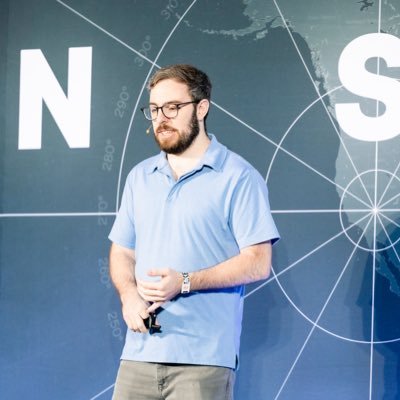 Ben Carman
Harrison leads freedom tech grants at the Human Rights Foundation, the program that funds open-source, privacy-preserving, censorship-resistant tools for human rights defenders around the world. He walks through how the program actually works: what HRF looks for, how projects get funded, and where the AI for Individual Rights program fits into supporting the kind of open model and open agent work this room is about. If you are building freedom tech and wondering how work like yours gets supported, this is the hour to find out. Come with questions about your own project.
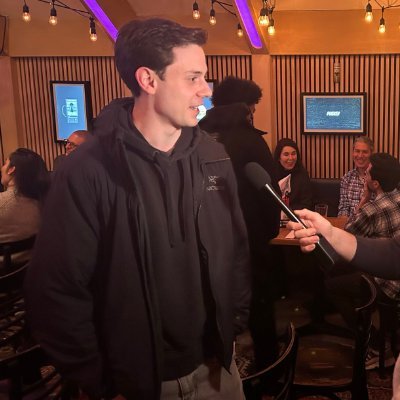 Harrison Friedes
Adewale is an ambassador at the Agentic AI Foundation, where he helps agentic AI become understandable, credible, and usable for the developers who actually have to build with it. Expect a practical session on open agents and the developer experience around them. Exact talk details land once we lock them with the speaker.
 Adewale Abati
Sherif is an applied AI researcher at Sybil Solutions working on LLM compression and self hosted inference: the craft of getting capable models to run on hardware you actually own. Exact talk details land once we lock them with the speaker.
 Sherif Cherfa
Private AI sounds simple until you try to build it. Alex walks through the challenges of creating an AI application that is completely private, end to end: keeping inference itself private by running it inside a trusted execution environment, keeping every message encrypted on the way in and out, and closing the gaps in between where your data usually leaks. If you want to use AI without handing your conversations to someone else, this is the map of what it actually takes.
 Alex Lewin
Nitesh is the developer behind Hunk, an AI code review tool, and works on Noah, a Bitcoin Ark wallet. Expect a session from the intersection of AI and Bitcoin, with working code over roadmap theater. Exact talk details land once we lock them with the speaker.
 Nitesh B
Matthias builds managed Claude-based agent systems at Nashville Automation and keeps always-on, self-directed agents running in production. A practical session on orchestration, guardrails, and what breaks when agents run unattended. Exact talk details land once we lock them with the speaker.
 Matthias Debernardini
UX and agent experience for agentic payments: making money move cleanly whether a person or an agent is holding the wallet, and what changes about design when your user might be a loop.
Stephen DeLormeThe people on the mic run real models in real rooms. Tap a face for the full bio.
Tickets sell in waves. When a wave sells out, the next one opens at a higher price. Waiting has a cost, and it is exactly this table.
Both days, every talk, the demos, the happy hour, the room. One badge covers all of it. Move early, pay less, bring your laptop.
Get your ticketALL AGES · BYO LAPTOP · DOORS 9AM